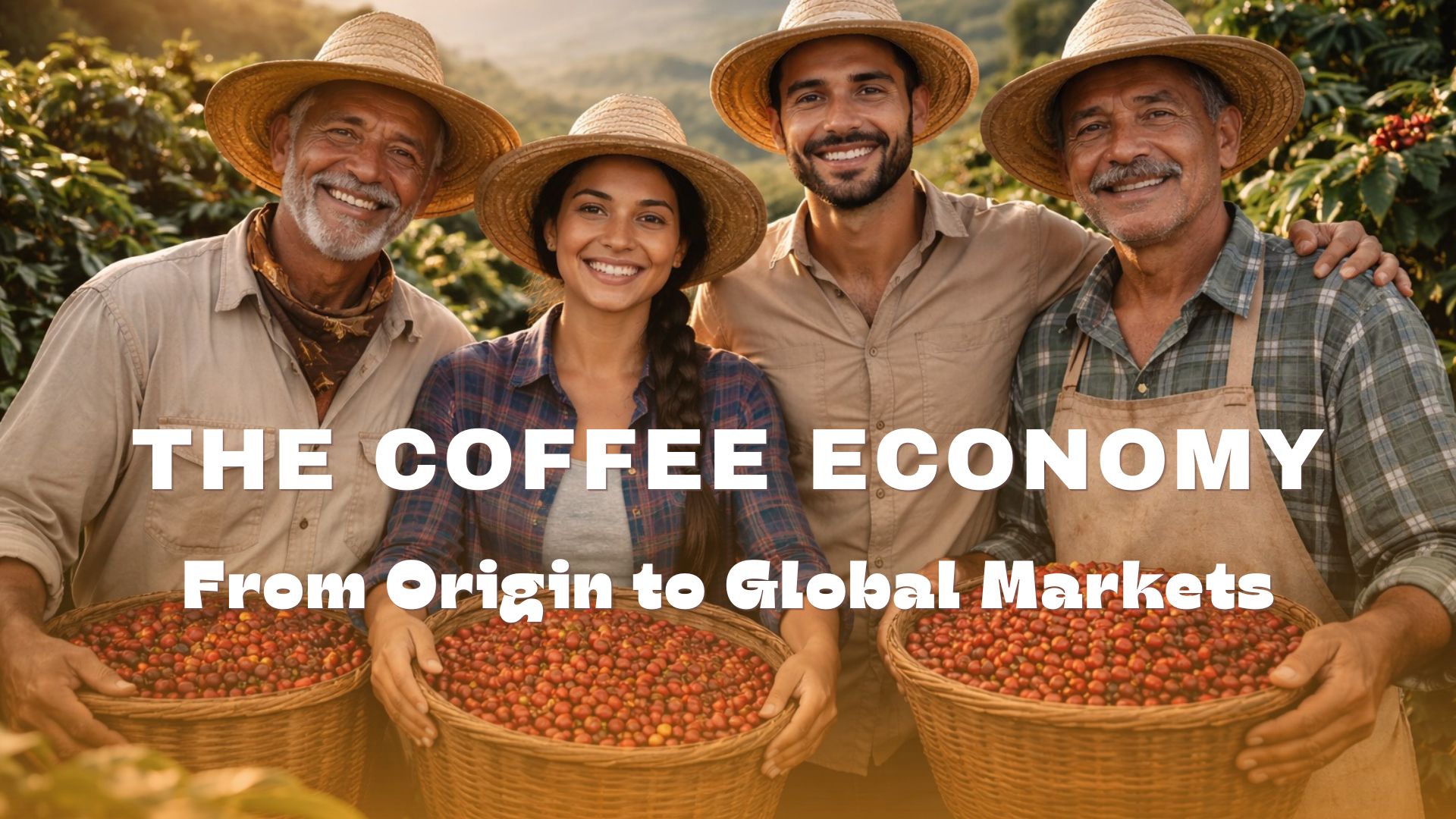
Coffee is not just a consumer product in the United States. It is a high-volume, globally traded commodity moving through one of the world’s most complex and interconnected supply chains.
The U.S. imports more coffee than any other country, over 23 million 60-kg bags annually, according to the United States Department of Agriculture, making it a market where logistics, compliance, and trade relationships carry as much weight as sourcing.
What is changing is not demand. It is how that demand is being fulfilled.
The U.S. Market: Demand Is Stable, Expectations Are Not
Coffee consumption in the U.S. remains strong, but expectations behind that consumption have shifted significantly.
According to the National Coffee Association, more than 60 percent of Americans drink coffee daily. Growth, however, is concentrated in premium and specialty segments, where buyers are placing greater emphasis on origin, sustainability, and transparency.
For importers and distributors, this has transformed coffee into a documentation-driven commodity. Every shipment now carries layers of validation, origin certifications, sustainability standards, and regulatory filings that must align across borders. Coffee is no longer simply shipped. It is verified, traced, and scrutinized.
Cross-Border Trade: A Western Hemisphere Advantage
The U.S. coffee supply chain is heavily anchored in Latin America, particularly Brazil and Colombia. What is shifting is not where coffee comes from, but how strategically those relationships are being managed.
Nearshoring principles are beginning to influence agricultural imports. Companies are prioritizing shorter transit routes, greater supply chain visibility, and reduced exposure to global disruptions. As a result, trade flows within the Western Hemisphere are becoming more tightly integrated and operationally important.
This is not a theoretical shift. It shows up in how businesses select suppliers, negotiate contracts, and plan logistics.
Strategic Ports: The Quiet Shift to the Gulf Coast
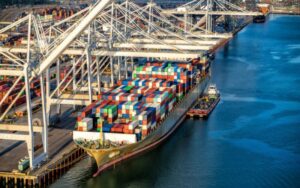
Ports have become strategic decision points rather than simple entry locations.
The Port of Houston reflects this shift. Long recognized for energy and industrial cargo, it is now emerging as a diversified gateway for agricultural imports.
In 2025, Port Houston handled a record of 4.3 million TEUs and more than 54.5 million tons of cargo, securing its position as the largest container port on the Gulf Coast. Trade lane data further indicates that over 11 percent of inbound container volume is tied to South America and the Caribbean/Central America, regions central to coffee production.
That alignment is strategic. It positions Houston as a viable and increasingly attractive entry point for coffee imports, particularly for distribution across Texas and the Southwest. As congestion and cost pressures continue to affect coastal ports such as Los Angeles and New York, importers are diversifying their routing strategies, and Houston is gaining ground as a result.
What Is Putting Pressure on the System
The coffee industry is stable in demand but increasingly complex in execution. Climate volatility continues to affect yields in producing countries, creating supply variability. At the same time, regulatory expectations are expanding, particularly around sustainability and traceability.
Speed has also become a competitive factor. Retailers and distributors are operating on tighter timelines, leaving little room for delays due to documentation errors or misalignment among partners.
Digital tools are improving supply chain visibility, but they rely heavily on accurate and consistent inputs. When those inputs fail, the entire system slows down.
Where Language Becomes a Business Function
Every shipment entering the U.S. carries documentation that must move across jurisdictions and regulatory frameworks. Contracts, bills of lading, customs declarations, and certifications are often drafted in Spanish or Portuguese and must be accurately interpreted in accordance with U.S. compliance standards.
In this environment, language is not a secondary consideration. It is embedded in the operational flow of trade.
A single misinterpretation can delay clearance, increase costs, or create compliance exposure. As the coffee industry becomes more structured and regulated, the expectation for precision mirrors what has long existed in sectors like energy and manufacturing.
A More Strategic View of the Coffee Economy
Coffee may not dominate headlines, but its trade ecosystem is evolving in ways that demand attention. It is becoming a high-frequency, cross-border operation where success depends on alignment across sourcing, logistics, and compliance.
The shift is subtle but significant. Businesses are moving from volume-driven strategies to systems that prioritize validation, regional efficiency, and operational consistency. In that environment, execution becomes a differentiator.
GlobalSpeak Translations in the Context of Industry Movement
Flor Dimassi’s presence at the World of Coffee San Diego 2026 reflects an important reality: the industries GlobalSpeak supports are constantly evolving, and those changes are happening in real time.
Events like these bring together exporters, importers, logistics providers, and decision-makers who are actively shaping how trade flows. Being part of those conversations provides direct insight into shifting expectations, emerging challenges, and the practical realities businesses are navigating across borders.
In a market like Houston, where international trade operates at scale and speed, that level of awareness translates into communication that is not just accurate but informed by the context in which it is used.
What Lies in the Future
Coffee’s future in the United States will not be defined by demand. That foundation is already established.
It will be defined by how effectively businesses manage complexity across borders—aligning logistics, compliance, and communication into a system that operates without friction.
Because in today’s coffee economy, the advantage does not come from what moves through the port.
It comes from how well everything behind it is managed.
GlobalSpeak Translations Is Ready to Assist
In a trade environment where coffee moves across borders amid increasing regulatory and documentation demands, precision in communication becomes part of the supply chain itself. From origin certifications to contracts and compliance records, every detail must align across languages and jurisdictions.
GlobalSpeak Translations helps businesses in logistics, energy, and international trade get the accuracy they need for high-value, cross-border transactions, so what moves on paper supports what moves through ports like Houston.
If your operations depend on getting it right the first time, it may be time to bring that same level of precision to your language strategy.
Call 844-557-7325 or visit www.globalspeaktranslations.com to start the conversation.